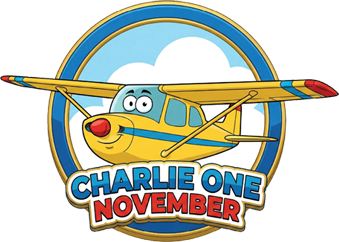

In every child’s life, there comes a moment when they face something big and scary. It might be starting a new school, learning a new skill, or taking the first steps toward something unknown. Fear is a natural part of growing up—but it’s also something we can learn to manage. That reassuring message shines in Joseph Scott’s Charlie One November: A Day to Remember, a children’s book that gently reminds readers of an essential truth: believing in yourself helps you move through fear.
At the center of the story is Charlie, a young airplane who, unlike the other planes, is terrified of flying. Thunderstorms, dark skies, and the wide-open air make Charlie feel small and unsure. Instead of soaring, Charlie stays on the ground, slowly taxiing along the runway while other planes lift off with ease. It’s an emotion many children recognize: watching others do something that feels impossible and wondering, Why can’t I do that?
What makes Charlie One November meaningful is the way it treats fear with kindness. Charlie doesn’t become brave all at once. His fear doesn’t magically disappear. Instead, the story becomes a journey—one where courage grows little by little. Charlie’s turning point comes when he meets B1RD, a feathered friend—a bird who becomes Charlie’s guide and encourager. B1RD has seen storms and strong winds before, and he understands that being nervous is part of learning. When Charlie hopes for a trick or a tool, B1RD offers something even better: steady, simple wisdom. He tells Charlie, “Always believe in yourself.” Those words become the heartbeat of Charlie’s progress.
Through B1RD’s encouragement, Charlie learns a lesson that matters for every child: courage doesn’t mean you never feel afraid. Courage means you take a step forward anyway. For kids, that can look like trying again after getting an answer wrong, joining a game even when you feel shy, or raising your hand even when your voice shakes. Like Charlie, children learn that fear can show up—but it doesn’t get to be the boss.
As Charlie’s journey continues, he discovers that bravery is a choice. He learns that everyone feels self-doubt sometimes, even the ones who look confident. The difference is what they do next. Charlie begins to trust himself more, and with each small attempt, he becomes stronger. That’s an important message for young readers: growth comes from practice, patience, and believing you can improve.
One of the most powerful parts of Charlie One November is how emotionally connected it feels. The story doesn’t treat fear as something silly or shameful. It treats fear as real—and it shows children that having big feelings doesn’t mean something is wrong with them. What matters is how they respond. By the end, readers understand that fear can be a stepping stone toward growth, not a wall that blocks the path.
The illustrations add to that impact by helping children see what Charlie is feeling. The pictures bring the characters to life with expression, movement, and energy. As pages turn, Charlie’s worried face and tense posture gradually shift toward determination and joy. The art doesn’t just decorate the story—it supports it, showing the emotional change that happens when someone begins to believe in themselves.
Ultimately, this book is about more than an airplane learning to fly. It’s about growth, courage, and self-discovery. Charlie’s fear may begin on a runway, but the lesson travels far beyond the sky. Whether a child is nervous about performing in front of others, trying something new, or walking into an unfamiliar situation, Charlie One November reminds them they have something powerful inside them: the ability to take the next step.
Joseph Scott’s story is a warm, timeless encouragement to children—and to the adults who read with them. It reminds us that it’s okay to feel scared. We don’t have to be perfect. We don’t have to have everything figured out. What matters is choosing to try, even when it’s hard. With belief, support, and small brave steps, Charlie shows young readers that they can do more than they think—and that their own “takeoff moment” might be closer than it seems.